
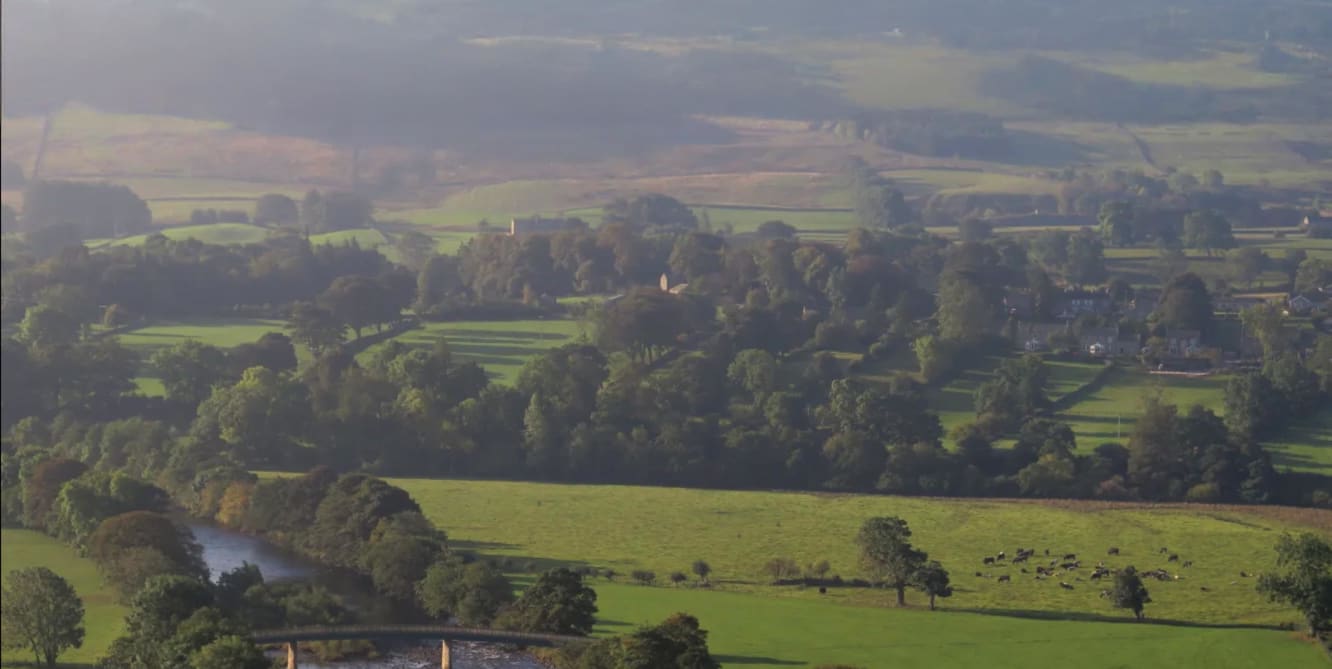
Yorkshire gets the headlines. The Lakes get the postcards. Teesdale quietly gets on with being beautiful.
There comes a point when getting away begins to mean something different. It's no longer about filling every hour, travelling further or coming home with a long list of places ticked off. It's about waking without an alarm. Taking time over breakfast. Walking somewhere simply because the path looks inviting. Finding a quiet table, ordering lunch, and deciding there's no particular need to be anywhere else that afternoon.
Modern life gives us plenty of reasons to want places like this. Busy roads, busy diaries and the constant interruption of notifications have made genuine quiet feel surprisingly precious. Increasingly, what people are after isn't more activity or more choice. It's breathing space.
County Durham has it in abundance.
This is a part of northern England that many people pass on their way to somewhere else. They know the city of Durham, perhaps, and its great cathedral. They may know Barnard Castle by name. But the rural landscape beyond it - the green folds of Teesdale, its stone villages, waterfalls, country roads and broad Pennine skies - often goes undiscovered. That's part of its appeal. There are places everyone has heard of: the Lake District, the Cotswolds, the Yorkshire Dales. And then there are places that quietly reward those willing to look a little further. Teesdale is one of them.
The Best Places Are Not Always the Most Famous
One of the things first-time visitors most often underestimate about this area is very simple: the beauty of the countryside. Not because it's hidden - the landscape is all around you - but because County Durham has never shouted about itself the way some of Britain's better-known rural destinations do.
Teesdale in particular has kept a quieter, less commercial character. Its villages haven't been turned into visitor attractions, and its roads aren't routinely crowded with sightseeing traffic. People live and work here. Farmers still shape the land, market towns retain their everyday purpose, and country pubs are places where local people meet as much as places where visitors are welcomed. You're not arriving at a landscape organised for tourism - you're stepping into one that carries on at its own pace, and I think that's why it feels so relaxing.
When friends visit Headlam Hall for the first time, I'm often asked where they should go. The obvious answer might be Durham Cathedral, York, or one of the other famous places within reach - all worth a visit. But my usual recommendation is simpler: take a leisurely drive west through Teesdale towards Barnard Castle. Not because it's the quickest route to anything, but because it's the journey that introduces you to this landscape.
Leaving the rolling farmland of lower Teesdale, the roads begin to reveal wider views, old farmsteads, dry-stone walls and villages built in the warm grey stone of the dale. There's no dramatic moment when the scenery announces you've arrived - the landscape just gradually opens around you. That's characteristic of the area. County Durham doesn't demand your attention. It earns it slowly.
A Landscape That Rewards Slowing Down
Barnard Castle makes a natural first stop. Built above the River Tees, the town combines historic streets, independent shops, antiques, cafés and the remains of the castle it's named after. It's compact enough to explore without a plan, and interesting enough to occupy far longer than you'd expect.
It also puts you within easy reach of two of the region's finest attractions. On its outskirts stands The Bowes Museum, an extraordinary French-style château housing internationally important collections of fine and decorative art - paintings, fashion, ceramics, and the famous Silver Swan automaton. All of it would be impressive in any setting; finding it in a market town in County Durham makes it more surprising still.
A short drive away, Raby Castle offers something quite different: one of England's great medieval castles, rising from an extensive estate of parkland, gardens and woodland. Its architecture and interiors tell centuries of history, while the surrounding deer park, gardens and cafés make it easy to lose most of a day there.
But the pleasure of travelling through Teesdale doesn't come only from arriving at its major sights. Continue west beyond Barnard Castle and the dale grows steadily more rural. The road follows the broad course of the Tees through villages including Cotherstone, Romaldkirk and Middleton-in-Teesdale. Fields give way to rougher moorland, the horizon rises, and the river gathers energy as it comes down off the Pennines.
If I had just one day to show a friend why I love this part of the country, I'd carry on through the dale and, time allowing, cross into Weardale too - a journey that reveals the quiet scale of the Durham Dales: open hills, old stone buildings, high roads and settlements that feel reassuringly removed from the pace of everyday life. There'd be no need to hurry.
Lunch might be at the Rose & Crown in Romaldkirk, our sister inn in one of Teesdale's most attractive villages. Standing beside the village green and the ancient church sometimes called the Cathedral of the Dales, it offers exactly the kind of pause a journey like this calls for: good food, a comfortable chair, and time to decide how far to go that afternoon.
From Romaldkirk, Low Force and High Force waterfalls are within easy reach. At Low Force, the Tees passes over a series of rocky ledges, framed by the surrounding landscape and crossed nearby by the graceful Wynch Bridge. Further upstream, High Force is one of the dale's most dramatic sights, the river plunging over the Whin Sill rock.
Both can form part of a longer walk, but neither has to become an expedition. This isn't a landscape that insists on being conquered - a short riverside walk, a view of the falls and a flask of coffee outside can be every bit as memorable as a full day on the hills.
In winter, rainfall gives the waterfalls particular force and the surrounding landscape takes on a starker beauty. In spring and summer, the riverbanks and meadows turn greener and richer. Autumn brings deeper colour to the trees and bracken. The experience changes with the seasons; the urge to linger doesn't.
The Places Locals Never Drive Past
The best local recommendations aren't always famous enough to make the guidebooks.
About four miles from Headlam Hall, at the top of the bank near Legs Cross, there's a view that still makes me slow down. The road follows the line of Dere Street, the ancient Roman route that once ran north from York and continued beyond Hadrian's Wall. Beside it stands the weathered remains of an Anglo-Saxon cross, probably dating from the ninth century. Centuries of exposure have worn the sandstone until it now looks more like a simple stone obelisk — an easily missed reminder that people have been travelling through this landscape for a very long time. Legs Cross is both a Grade II* listed structure and a scheduled monument.
A Local's View: Legs Cross
From the high ground near the cross, the landscape falls away to the south. On a clear day, the view reaches across the Tees Valley towards the distant North York Moors - fields, woods, farms and villages spread across the foreground, hills forming a long horizon beyond.
There's no car park, no interpretation board, nothing to announce it. Most people drive straight past - which is exactly why the ones who stop tend to remember it.
Places like this create a different relationship with a destination. You feel like you've been shown something rather than directed towards it - the difference between following an itinerary and getting a recommendation from somebody who knows the road. County Durham is full of these smaller discoveries: an unexpected view, a roadside church, a riverside path, a village green, a pub reached just as everyone's ready for lunch. They rarely make the headline attractions of a holiday. Very often, they're the parts people actually remember.
Luxury Isn't Always What You Think It Is
Ask most people what luxury means and they'll describe more of something - more space, more facilities, more courses at dinner, more to choose from. Those things can all be enjoyable. But after years of welcoming people to Headlam Hall, I've come to think the most valuable luxuries are usually less tangible: time, quiet, a good night's sleep, a walk before breakfast, a conversation nobody's rushing to end, the chance to watch the light change across the countryside.
Sometimes luxury isn't about having more. It's about finding somewhere quieter - and that's where Headlam Hall belongs in this landscape.
The Hall stands in the small rural settlement of Headlam, surrounded by the gently rolling countryside of lower Teesdale. Its setting is peaceful without being isolated - Barnard Castle, Darlington, Bishop Auckland and Richmond are all within reach, as is the A1 at Scotch Corner. Guests can spend the day exploring and be back in the quiet of the Hall by late afternoon. Or they can decide not to go anywhere at all.
There are four acres of walled gardens to wander through: broad lawns, herbaceous borders, old beech hedges, a rose garden, an ornamental canal, a kitchen garden and views towards the golf course. In summer, a deckchair on the lawn or a drink on the terrace may be all the itinerary anyone needs.
For those who prefer activity, there's golf, tennis, walking and the wider countryside. For those who just need to stop, there are a couple of lounges, open fires in the colder months, and a spa overlooking the fields and golf course. The spa itself has a 15-metre swimming pool, sauna, steam room and outdoor hydrotherapy pool - though the real value of a spa afternoon isn't the list of facilities. It's the permission it gives you to step away from your normal pace: to swim a few unhurried lengths, sit outside in warm water, read for an hour, or do nothing at all without feeling the time should be used more productively.
That sense of freedom is central to a countryside escape. A good hotel should offer possibilities without turning them into obligations.
A Hotel Shaped by Its Surroundings
Headlam Hall wasn't built to a single grand plan. It's developed gradually, and I think organically.
The Hall itself dates from the 17th century and became a hotel after the Robinson family bought it in the 1970s. At the time, the gardens had grown so overgrown that their first cutting reportedly produced 57 bales of hay. What guests see today - the lawns, borders, rose garden, waterways and kitchen garden - is the result of years of patient work.
The same is true of the hotel more broadly. Accommodation was added and adapted across the Hall and surrounding buildings over time. The golf course and spa were two of the most significant stages in Headlam's evolution, expanding what guests could experience while also building a closer relationship with the local community. Golfers and spa members started visiting regularly, and many became familiar faces rather than simply customers using a facility - part of the continuing Headlam story.
That matters, because a country hotel shouldn't feel disconnected from the place around it. Headlam has always had one foot in hospitality and the other in rural life. The adjoining farm, the gardens, the local members, the suppliers arriving at the kitchen door, the guests setting out to explore the dale - all of it contributes to what the place is. The aim has never been to turn a historic house into something unrecognisable, but to let it grow without losing what made it special in the first place.
Bedrooms, spa treatments and good dining matter, of course. But so do the smaller signs that the hotel belongs here: muddy walking boots by a door, golfers discussing the weather, vegetables being collected from the kitchen garden, local people meeting for coffee. This is a living country hotel, not a country-house stage set.
A Sense of Place at the Table
Food is one of the simplest ways to understand an area - not through elaborate claims about provenance, but through genuine relationships with the people who grow, rear and produce what reaches the table.
About five miles from Headlam Hall is Acorn Dairy, an organic farm that supplies the hotel with fresh dairy produce most days of the week. It's the kind of local connection that can easily get reduced to a line on a menu, but its real importance is more personal: the milk, cream and butter haven't come through an anonymous supply chain from somewhere unknown. They come from a nearby farm, from people the hotel actually knows.
The same is true of Headlam's kitchen garden. During the growing season, chefs can walk out from the kitchen and collect herbs, vegetables and other produce for the day's menus. The garden isn't large enough to supply everything a busy hotel needs, and that's not really the point - its value is in connecting the kitchen directly with the seasons and the ground outside.
A leisurely breakfast, a pub lunch in Romaldkirk, afternoon tea after a garden visit, dinner at the Hall - these all become part of the journey rather than interruptions between the important sights. They're among the important experiences.
Proper hospitality often shows up in these unhurried moments: a drink brought to the terrace, a table held while guests finish getting ready, a recommendation shared over breakfast, a conversation with somebody who remembers where you walked the day before. Good service makes people feel looked after. Good hospitality makes them feel at ease.
A Countryside Escape for Every Season
A place like Teesdale can't be understood in a single visit, because the landscape changes so distinctly through the year.
Spring arrives gradually. Daffodils appear around the Hall, birdsong returns to the gardens, and the surrounding countryside starts to soften after winter. Days grow longer without yet getting busy, which makes spring an especially good time for walking, visiting gardens and exploring historic attractions before the height of summer.
Summer brings long evenings and the chance to spend most of the day outside. The garden doors stay open, drinks move onto the terrace, and a walk after dinner can run until the light finally fades. It's the season for scenic drives, riverside paths, garden visits and lunches that stretch gently into the afternoon.
Autumn is perhaps my favourite. There's something almost magical about the change as the nights draw in, the air turns fresher and fires are lit again inside the Hall. Across the countryside, the trees turn through shades of gold, russet and red. Walks become crisper, meals feel more comforting, and coming back to the warmth of the hotel becomes part of the pleasure of the day. There's a point in autumn when indoors and outdoors feel perfectly balanced - enough colour and light to tempt you out, followed by an evening when a fire, a glass of wine and a comfortable chair seem exactly right.
Winter has its own, quieter rewards. The bare landscape reveals views hidden by summer foliage. The waterfalls turn more dramatic after rain, market towns and castles take on a different atmosphere, and the long evenings leave time for reading, conversation and dinner without any pressure to hurry elsewhere.
County Durham isn't a destination that closes when summer ends. If anything, the quieter seasons show its character most clearly.
The Last Thing I Hope Guests Do
When asked what I hope every guest experiences before leaving Headlam Hall, I could point to something grand - dinner in the restaurant, an afternoon in the spa, a drive through Teesdale, a visit to one of the great historic houses nearby.
But the answer is simpler than that. I hope they take a quiet stroll around the gardens. Ideally on a sunny morning when the day still feels full of possibility, or on a warm summer evening when the light rests across the lawn and there's no real reason to go inside.
They might walk beside the herbaceous borders, pass through the old beech hedges, pause by the rose garden. Maybe they'll look towards the golf course, hear birdsong from the surrounding trees, or notice one of the chefs gathering something from the kitchen garden. Nothing dramatic needs to happen. That's rather the point.
Perhaps the real pleasure of Headlam Hall isn't that there's so much to do. It's that, for a little while, you feel no urgency to do any of it.
And perhaps that's what makes County Durham so memorable. It doesn't demand your attention.
It quietly earns it.